


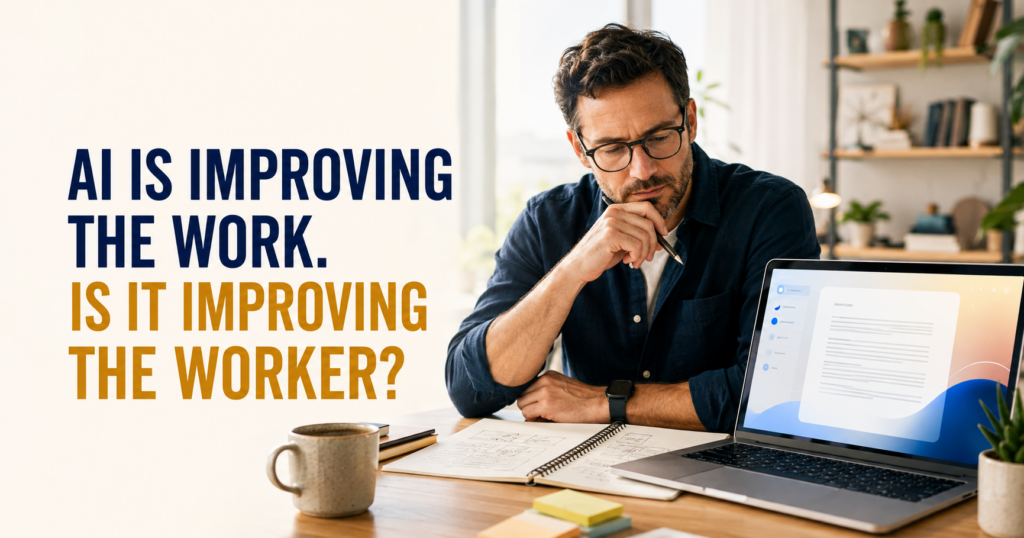
AI can help people produce better work—and produce it faster. It can strengthen an argument, improve an analysis, organize scattered ideas, and generate a polished answer in minutes.
But what if AI is improving the work faster than it is improving the person doing it?
This distinction is easy to miss because organizations usually evaluate what they can see: the completed report, the correct response, the polished presentation, or the problem successfully resolved. When the output improves, we naturally assume that the worker’s capability has improved with it.
That may not always be true.
AI can compensate for gaps in knowledge, reasoning, and experience so effectively that strong output may conceal weak—or undeveloped—underlying skills. A person can produce an impressive answer without fully understanding how the answer was reached, which assumptions shaped it, or how to recognize when it is wrong.
The immediate result may be better performance. The longer-term result could be stalled development or gradual cognitive deskilling.
This does not mean organizations should discourage the use of AI. The technology is already becoming an important part of how work gets done. The more useful question is how to gain its benefits without weakening the human capabilities that remain essential.
For workforce and HR professionals, educators, and managers, that distinction matters. Organizations will still need people who can think clearly when the answer is uncertain, the situation is unfamiliar, or the technology is wrong. Those capabilities are developed through practice: defining problems, evaluating evidence, considering alternatives, making judgments, and learning from mistakes.
If AI routinely performs those parts of the task, people may become more productive without becoming more capable.
That creates an important challenge for workforce development. We may need to evaluate not only whether someone produced a good result, but also whether the process strengthened their ability to produce good results independently, question what the technology provided, and respond when familiar tools or patterns no longer apply.
This short video Observation explores that emerging risk:
Are We Building Skills—or Just Producing Better Answers?
Watch the video, then consider:
Are we measuring the quality of the output—or the growth of the person producing it?